Saturday, February 23, 2013

Bluebird, Woodpecker, Cardinal & other Backyard Birds

Sometimes I tend to dismiss the commor birds I see in my own backyard, yet many of them are as beautiful as any I've seen elsewhere. However, taking pictures through a window doesn't always produce the clearest results. Although I can clean the windows on the inside, the outsides are more difficult. And then there's the glare. Many times the best lighting is when the greatest glare occurs. Nevertheless, I've decided to include here some pictures taken through those less than sparkling, glary windows.

These pictures are some of my favorites. Last summer I allowed parts of my backyard to become more like a meadow than a yard. Some of my neighbors questioned my choice, but since it wasn't visible from the road, I felt the benefit for the birds outweighed the concern about its scraggly appearance. And I thought it beautiful.

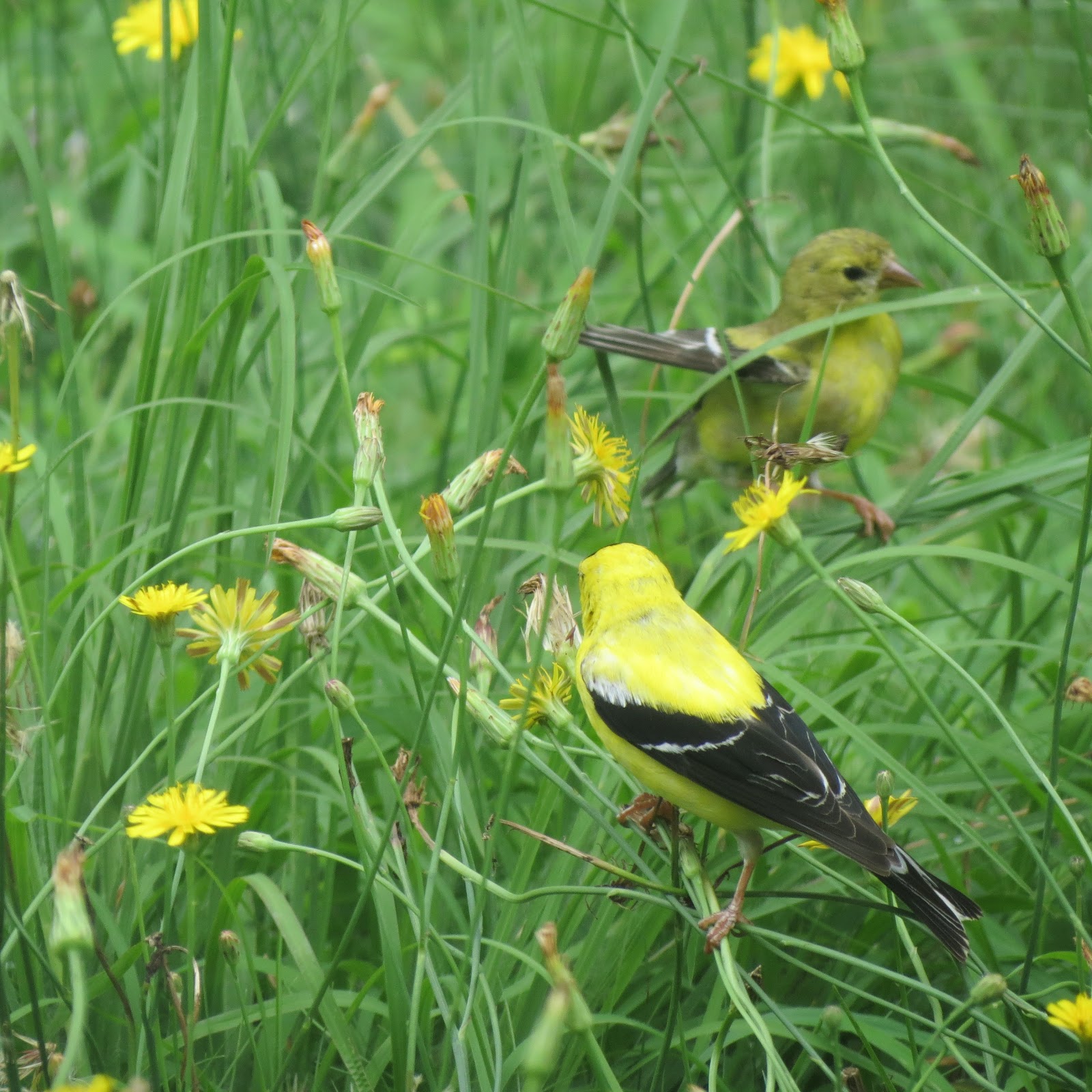
                                                                     Goldfinch


                                                                     And with the female


This little bluebird and his mate were visiting my feeders for a few weeks this winter. Unfortuneately, I didn't get a good picture of her.


Mr. Cardinal and his wife are often enjoying my feeders. Actually, although the female isn't bright red like he is, I think she's equally beautiful.


This Red-bellied Woodpecker is probably waiting till he thinks it's safe to dine on the suet near that tree.
 
 
This White-throated Sparrow is one of many different Sparrows that feed in my yard. They love sitting on the fence and hiding in the Cyress trees behind it.

Monday, February 11, 2013

Merganser, and Brants

Yesterday at Barnegat Light couldn't have been more beautiful. Cold and windy, but that's to be expected in February. Birding with friends was the perfect way to spend a Sunday afternoon, especially after the previous gloomy weather. It also helps when one of those friends identifies the birds I'm still not sure of.


This little fella seemed to know he was being photographed and kindly posed so I was able to get a few pictures of him.


These Brants were also considerately making themselves good photo subjects.
 
 
Another picture of the Pink-footed Goose below, rare in New Jersey, was seen a few weeks ago in a pond in Toms River on a VERY cold day.  Notice the brown head and the pink on its bill.
 

Wednesday, January 23, 2013

Pink-Footed Goose, Harlequin Duck & Long-tailed Duck

Perfect weather for winter birding at the Barnegat Lighthouse on January 5th. Although it was cold, dressed in heavy winter clothes, I found it most enjoyable, even at the end of the jetty.


                                                                 Long-tailed Duck
 
                                                                    Harlequin Duck

Sunday, Jan. 20,  I saw Northern Lapwings in New Egypt, but they were so far away on the other side of a cow field, that I had to look through a friend's scope. Even then, with the extreme wind making it hard to focus, it was difficult to see. Nevertheless, I did get a fairly good view of them.

Yesterday was extremely cold and quite windy, but the sighting of a Pink-Footed Goose (pictured below), made freezing fingers tolerable.


Saturday, September 8, 2012

Immature Black Back Gull and More


Summer’s  end has been quiet, with the same birds at the feeder that have been there since I put them up last winter: Finches, Sparrows, Titmice, Blue Jays, Chickadees, and Doves. Then I went on a photography workshop on an island off the New Hampshire coast. And although I didn’t see a wide variety of birds there, the large gull population provided interesting photo opportunities, such as this immature Great Black Back Gull pleading to be fed.

And this one shouting above the wind.


A Herring Gull posing on a tombstone.


There were a few other species. This little peep found food in a sheltered pond.


The best recent sightings were at a wildlife refuge after I returned home. The American Bitern pic was very difficult to get because he blended so well with the grasses.


Luckily, this Clapper Rail liked to pose.


 The fall migration is just beginning. Soon there should be many interesting sightings to report. I'm looking forward to seeing a wide variety of hawks in Cape May.

Tuesday, August 7, 2012

From Green Head Flies To Peregrine Falcons


Prepared with our bins and cameras, a friend and I recently set off for a birding adventure through a New Jersey marsh on a steamy hot day. I’m driving, thought I, no bugs will get into the Jeep, so I left my insect repellent at home. But I had over looked the need to open windows to shoot pictures. When we stopped to get a closer look at sandpipers, interspersed with other small shore birds, I soon realized our mistake.

My friend got out with her camera to take a closer look, while I waited in the Jeep. Immediately, I felt something biting my feet and legs: feasting green heads. To make matters worse, I was wearing shorts. I swung open my door and shooed out the vicious beasts.

Then, instead of focusing on scratching, I turned off the engine and got out. While swatting flies, I managed a few pictures of Dowitchers (I’m not sure whether they were long or short bill), Sandpipers, and Killdeer. A White Pelican made a graceful descent into the pond, but was too far away for a clear picture.
 
As we continued on in the Jeep, the flies were our ever-present companions, both inside and out, clinging to the Jeep ceiling and darting at the windows. In spite of their biting presence, they did not ruin the afternoon. 

Other birds of interest were a Peregrine Falcon and fresh juvenile Forster Terns.

                                                                Top bird is a Killdeer.

                                                                Peregrine Falcon

                                                             Fresh Juvenile Forster's Tern

Wednesday, July 18, 2012

Butterflies

On a recent visit to a butterfly sanctuary, being with other group members was the best part of the trip. Although we were able to get a few good pictures, there were only a few species to view.

Wednesday, July 11, 2012

Goatsuckers


A few nights ago, ten members of the local birding club, well equipped with bug spray, set off to listen for Whip-poor-wills and observe Common Nighthawks, commonly referred to as goatsuckers. The birds received this erroneous label many years ago when farmers believed they came at night and sucked goats’ milk. Since these birds eat flying insects, it seems likely they were attracted to insects around the goats.

We met at 6:30 p.m. to drive over 40 miles to an area the Nighthawks are known to frequent in Wharton State Forest. While waiting to sight them, we enjoyed an unusual sunset, with the lowering sun shining through a large cloud, presenting a wide range of colors. We were at a spot so seldom traveled that other than two passing vehicles, our only other company there were two deer.  

Our first sign of a Nighthawk came at dusk when we heard one’s distinctive call. Soon there were calls coming from various directions. Then someone spotted a Nighthawk in the sky. After circling high above the forest, a Nighthawk would suddenly dive straight down, the air in his wings creating a sound that to me sometimes resembled an organ note, sometimes a distant train whistle, other times it was more like a boom, and once it was as if the diving bird farted. They always reversed the dive shortly before reaching the ground. 

Only the trees and the deer know whether the sounds the birds’ wings made or the people oohing, aahing and chuckling over them was funnier. 

In spite of not hearing any Whip-poor-wills, the trip was well worth the ride to get there.

The next trip is to a butterfly farm.